Pages

Monday, March 23, 2026

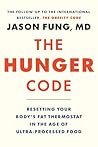
Book Review: The Hunger Code

The Hunger Code: Resetting Your Body's Fat Thermostat in the Age of Ultra-Processed FoodThe Hunger Code: Resetting Your Body's Fat Thermostat in the Age of Ultra-Processed Food by Jason Fung
My rating: 5 of 5 stars

Dr. Fung reinforces timeless dietary advice: reduce intake of ultra-processed foods, avoid constant eating, and build social connections that support healthy habits. He explores the three types of hunger—homeostatic, hedonic, and conditional—explaining their underlying causes and offering solutions to address them. Understanding these root causes can help guide effective solutions. Dr. Fung demonstrates how factors like food structure, digestion, absorption, and hormones influence weight.

In part four of the book, How to Manage Hunger, readers will find the most practical suggestions in three chapters: Making Weight Loss Automatic, Unlocking the Secrets of Success—Your Mindset and Your Habits, and Putting the Golden Rules of Weight Loss into Action.

The book is easy to understand and includes 50 tips boxed throughout the text and compiled at the end. It uses good analogies to explain concepts. Key information is highlighted in bold to catch the reader's eye.

While Dr. Fung is recognized for his fasting protocols, this isn't the focus of the book. His humor and choice of words might put off some readers.

I would recommend this book for all readers.

View all my reviews

Sunday, March 1, 2026

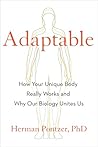
Book Review: Adaptable

Adaptable: How Your Unique Body Really Works and Why Our Biology Unites UsAdaptable: How Your Unique Body Really Works and Why Our Biology Unites Us by Herman Pontzer
My rating: 3 of 5 stars

This book is written from the perspective of an evolutionary anthropologist, Herman Ponzer, PhD, who states that our ability to adapt to different environments physiologically explains how we have become so diverse. Even in these modern times, our bodies continue to adapt to various diets, activity levels, and environmental stresses.

You will enjoy this book if you are looking for an explanation of how the body works within the context of evolutionary history, genetics, environment, and culture.

Nine chapters cover how we grow and mature; how our brains develop and learn; how our hearts, lungs, and digestive systems deliver oxygen and nutrients; how we manage toxins, temperature, and water balance; how we move and reproduce; how our immune system keeps invaders at bay; and how we age and decline.

From a nutritional perspective, our access to high-calorie foods has overwhelmed our primal systems, underscoring the need for whole, minimally processed foods that align better with how our bodies manage energy. The author shows how diet quality intersects with other lifestyle behaviors, such as sleep, stress, immune function, and activity. Supportive habits can enhance how well the body adapts and maintains health over time.

One of the book’s broader messages is that humans have thrived on a wide variety of diets across different ecosystems, from high-carbohydrate plant-rich diets to mixed omnivorous patterns. The author’s research suggests that there is no single optimum macronutrient ratio for everyone, but rather flexibility based on individual biology and context.

However, general recommendations consistent with his evolutionary framework suggest that diets high in protein and fiber help control hunger and maintain stable energy levels. Additionally, ultra-processed foods can override satiety signals, leading to overeating.

Evolutionary explanations can be lengthy, and some topics may be controversial.

LinkedIn Review
View all my reviews