Pages

Wednesday, July 8, 2026

Book Review: The Menopause Gut

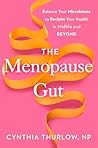
The Menopause Gut: Balance Your Microbiome to Reclaim Your Health in Midlife and BeyondThe Menopause Gut: Balance Your Microbiome to Reclaim Your Health in Midlife and Beyond by Cynthia Thurlow
My rating: 4 of 5 stars

Nurse practitioner Cynthia Thurlow explores the growing body of research linking hormonal changes during perimenopause and menopause to alterations in the gut microbiome. The book explains how declining estrogen levels may affect gut health, inflammation, metabolism, immune function, cognition, bone health, and weight regulation. Thurlow emphasizes that lifestyle strategies, including nutrition, physical activity, sleep, stress management, and, when appropriate, hormone therapy, can support healthy aging.

Key takeaways include prioritizing a high-fiber diet to support microbial diversity, minimizing foods and lifestyle factors that disrupt gut health, incorporating regular strength training and exercise, managing stress, optimizing sleep, and understanding the role of hormone replacement therapy.

Readers should note that research on the gut microbiome and menopause is evolving. It is important to consult your doctor before making any significant changes.

This book is recommended for women seeking a deeper understanding of how gut health shapes menopausal outcomes. It may also be valuable for health practitioners who want to incorporate microbiome-focused strategies into midlife metabolic care.

Chapter summaries provide a succinct wrap-up of each chapter. Many personal stories are woven throughout the book, illustrating how to implement her recommendations and the successes achieved. The FAQ and recipes chapters are valuable resources.

If you want to look up the studies supporting her advice, you need to visit her website. The functional perspective may not resonate with all readers.

View all my reviews

Friday, June 26, 2026

Book Review: Change the Recipe

Change the Recipe: Because You Can't Build a Better World Without Breaking Some Eggs – The New York Times Bestselling Chef's Life Lessons on Food and Humanitarian ActionChange the Recipe: Because You Can't Build a Better World Without Breaking Some Eggs by José Andrés
My rating: 3 of 5 stars

This book is a collection of life lessons from chef, humanitarian, and World Central Kitchen founder José Andrés. Drawing on experiences in professional kitchens, disaster response, and decades of bringing people together through food, Andrés shows how cooking can foster resilience, compassion, innovation, and community. He believes strongly that food is far more than nourishment; it is a powerful force for connection and positive change.

One of the book's central messages is that meaningful change often requires adaptability and a willingness to embrace uncertainty. Andrés encourages readers to "change the recipe" when circumstances demand it—whether in the kitchen, at work, or in life. We need to stay curious, put people first, and solve problems creatively. His stories reinforce that sharing meals, reducing waste, supporting communities, and responding with generosity are practical ways for everyone to make a difference.

This book is recommended for all readers who want to be inspired and reminded that we can use food to make a difference in our health and the health of those around us. I found it easier to read just one chapter a day, so as not to tire from all of the lessons. Overall, Andrés is an amazing human, and I enjoyed learning more about him.

View all my reviews

Tuesday, June 16, 2026

Book Review: Eat to Beat Disease

Eat to Beat Disease: The New Science of How Your Body Can Heal ItselfEat to Beat Disease: The New Science of How Your Body Can Heal Itself by William W. Li
My rating: 4 of 5 stars

This book was written to give you the knowledge and tools to make better decisions about what to eat every day. This is not a diet book. Instead, it provides scientific evidence and recommendations on foods to incorporate to help prevent or battle disease and support health.

This book has three parts. Part I, Hardwired for Health: Our Body’s Natural Defense Systems, covers the five systems: angiogenesis, regeneration, microbiome, DNA protection, and immunity. Your body uses these systems to fight disease and heal itself.

Part II, Eat to Beat Disease: The Evidence for Food as Medicine, explores how to feed your body to regenerate your health and activate your immune command center. You will learn which foods activate these defense systems, including supporting research and proven results.

The final Part III, Plan, Choose, and Act: Putting Food to Work, covers practical ways to incorporate these foods into your life, including the 5 x 5 x 5 framework, rethinking your kitchen, meal plans, and recipes.

The book offers an accessible overview of emerging nutrition science and reinforces the value of food as a cornerstone of preventive health. It is recommended for all eaters.

This book is a wealth of science-backed information, which can be overwhelming at times.


View all my reviews

Sunday, June 7, 2026

Book Review: The Art of Metabolic Health

The Art of Metabolic Health: A Science Based Guide to Fat Loss, Hormone Health and Metabolic ResilienceThe Art of Metabolic Health: A Science Based Guide to Fat Loss, Hormone Health and Metabolic Resilience by Maria Emmerich
My rating: 5 of 5 stars

Authors Maria and Craig Emmerich explore the science of metabolism, body composition, hormone balance, and long-term health. They examine why many people struggle with weight management, low energy, cravings, and metabolic disorders despite efforts to follow healthy eating patterns.

A key message of the book is that no single dietary approach works for everyone. The Emmerichs review a range of nutritional strategies—including low-carbohydrate, ketogenic, and higher-protein eating patterns—and emphasize tailoring recommendations to an individual's health status, goals, and stage of life. They also address factors that can influence metabolic health, such as menopause, chronic stress, and inflammation.

The book has 14 chapters covering how we got fat and sick, fuel, macronutrients, diets, fasting, fat loss, hormones, problems and solutions, supplements, protocols, and biohacking.

The book encourages readers to move beyond calorie counting and focus on the factors that influence metabolic function.

This is an excellent resource.

Don’t be overwhelmed by the amount of information. There are many protocols and supplement suggestions; be sure to consult your doctor before starting a regimen.

View all my reviews

Tuesday, April 7, 2026

Book Review: The High-Protein Plate

The High-Protein Plate: 100 Satisfying Everyday RecipesThe High-Protein Plate: 100 Satisfying Everyday Recipes by Rachael DeVaux
My rating: 4 of 5 stars

This practical, science-backed guide helps readers consistently meet their protein needs without overcomplicating their diet. Combining nutrition education with real-life application, the book explains why protein is crucial for energy, satiety, blood sugar regulation, muscle maintenance, and overall health.

In the introduction, there is a wealth of information on the power of protein, its best sources, protein amounts, pantry staples, a meal-prep guide, and a 28-day reset. The rest of the book features 100 doable high-protein recipes (breakfast, mains, snacks, dessert) along with tips, notes, and macronutrient breakdowns. This book is recommended for those interested in increasing their protein intake and seeking help with implementation via meal prep and menu planning.

There is more than meets the eye with this cookbook. The author fully explains why protein is important, then provides guidance on incorporating her recipes. The recipes are comprehensive, with information on nutrients, time, and modifications. The pictures are beautiful. Some gluten-free or grain-free ingredients may be unfamiliar to some readers.


LinkedIn Review

View all my reviews

Monday, March 23, 2026

Book Review: The Hunger Code

The Hunger Code: Resetting Your Body's Fat Thermostat in the Age of Ultra-Processed FoodThe Hunger Code: Resetting Your Body's Fat Thermostat in the Age of Ultra-Processed Food by Jason Fung
My rating: 5 of 5 stars

Dr. Fung reinforces timeless dietary advice: reduce intake of ultra-processed foods, avoid constant eating, and build social connections that support healthy habits. He explores the three types of hunger—homeostatic, hedonic, and conditional—explaining their underlying causes and offering solutions to address them. Understanding these root causes can help guide effective solutions. Dr. Fung demonstrates how factors like food structure, digestion, absorption, and hormones influence weight.

In part four of the book, How to Manage Hunger, readers will find the most practical suggestions in three chapters: Making Weight Loss Automatic, Unlocking the Secrets of Success—Your Mindset and Your Habits, and Putting the Golden Rules of Weight Loss into Action.

The book is easy to understand and includes 50 tips boxed throughout the text and compiled at the end. It uses good analogies to explain concepts. Key information is highlighted in bold to catch the reader's eye.

While Dr. Fung is recognized for his fasting protocols, this isn't the focus of the book. His humor and choice of words might put off some readers.

I would recommend this book for all readers.

View all my reviews

Sunday, March 1, 2026

Book Review: Adaptable

Adaptable: How Your Unique Body Really Works and Why Our Biology Unites UsAdaptable: How Your Unique Body Really Works and Why Our Biology Unites Us by Herman Pontzer
My rating: 3 of 5 stars

This book is written from the perspective of an evolutionary anthropologist, Herman Ponzer, PhD, who states that our ability to adapt to different environments physiologically explains how we have become so diverse. Even in these modern times, our bodies continue to adapt to various diets, activity levels, and environmental stresses.

You will enjoy this book if you are looking for an explanation of how the body works within the context of evolutionary history, genetics, environment, and culture.

Nine chapters cover how we grow and mature; how our brains develop and learn; how our hearts, lungs, and digestive systems deliver oxygen and nutrients; how we manage toxins, temperature, and water balance; how we move and reproduce; how our immune system keeps invaders at bay; and how we age and decline.

From a nutritional perspective, our access to high-calorie foods has overwhelmed our primal systems, underscoring the need for whole, minimally processed foods that align better with how our bodies manage energy. The author shows how diet quality intersects with other lifestyle behaviors, such as sleep, stress, immune function, and activity. Supportive habits can enhance how well the body adapts and maintains health over time.

One of the book’s broader messages is that humans have thrived on a wide variety of diets across different ecosystems, from high-carbohydrate plant-rich diets to mixed omnivorous patterns. The author’s research suggests that there is no single optimum macronutrient ratio for everyone, but rather flexibility based on individual biology and context.

However, general recommendations consistent with his evolutionary framework suggest that diets high in protein and fiber help control hunger and maintain stable energy levels. Additionally, ultra-processed foods can override satiety signals, leading to overeating.

Evolutionary explanations can be lengthy, and some topics may be controversial.

LinkedIn Review
View all my reviews